The UAE — Peace, Vision
& the Future of Global Trade
Built on a foundation of peace and forward-thinking leadership, the UAE has transformed desert into a global powerhouse. Today it leads the world in gold trade, maritime logistics, and a 100-year plan to become the planet's most connected economy.
A Nation at Peace — and a Region Transformed
While much of the Middle East has faced turbulence, the UAE has maintained decades of extraordinary peace, safety, and unity — a deliberate achievement of visionary leadership and a national commitment to tolerance.
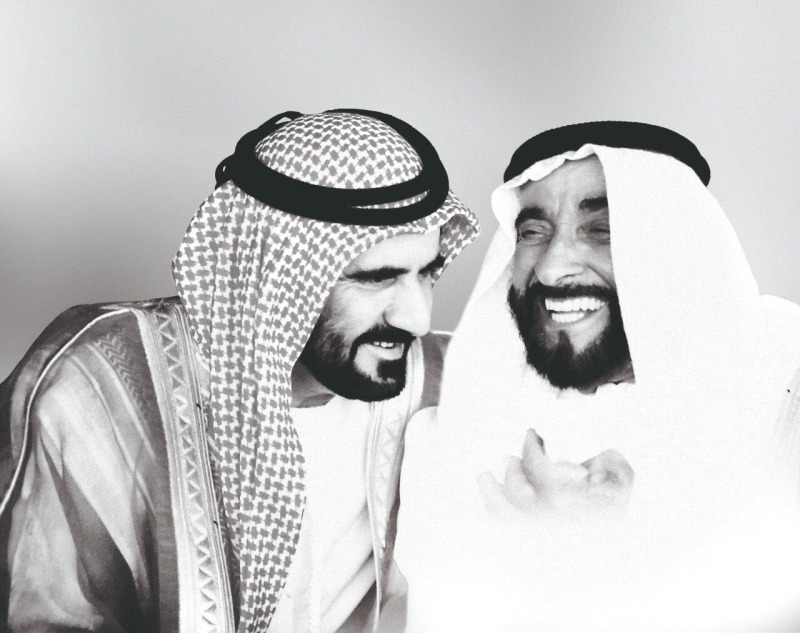
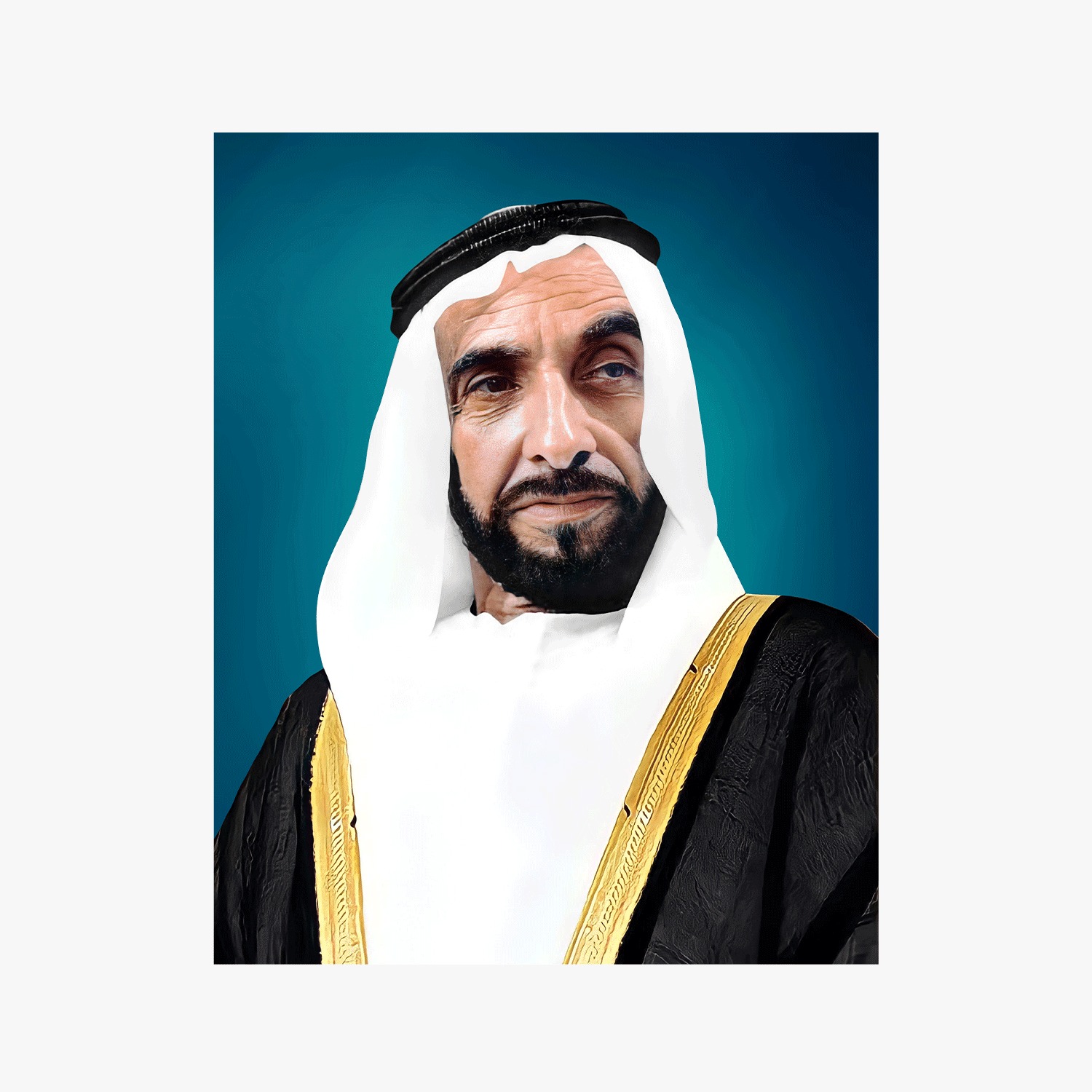
Founded in 1971 by the late Sheikh Zayed bin Sultan Al Nahyan, the UAE was born from a radical idea: that seven distinct emirates could unite under one flag, one currency, and a shared purpose. Sheikh Zayed's conviction was simple — peace is the foundation of prosperity. That conviction has never wavered across five decades.
Unlike many of its regional neighbours, the UAE has never engaged in territorial conflict. Instead, it has positioned itself as a regional mediator, a major humanitarian donor, and an economic anchor for the Arab world. In 2020, the landmark Abraham Accords saw the UAE become the first Gulf state to normalise relations with Israel — a historic step executed from a place of national confidence and security, not pressure.
"The greatest of all gifts we can give to our children is that they inherit a nation of peace, not a nation of war. A nation where they compete in achievements, not conflicts."
— HH Sheikh Mohamed bin Zayed Al Nahyan, President of the UAEThe UAE's military posture remains strictly defensive. While it maintains capable armed forces, the national strategy has always centred on diplomacy, soft power, and economic interdependence as the true guarantors of long-term peace. This stability is not accidental — it is engineered, and it is the bedrock on which every business decision in the UAE rests.
Today, expats from over 200 nationalities live and work side by side. In a world fractured by nationalism and identity politics, the UAE's culture of tolerance — enshrined in law through the Ministry of Tolerance — is itself a remarkable geopolitical achievement and a powerful advertisement for the UAE as a place to build.
Seven emirates unite under Sheikh Zayed's vision. From a largely pre-industrial society, the UAE begins its transformation into a modern state with zero debt and sovereign ambition.
A national agenda to build a knowledge economy, world-class healthcare, and diversified non-oil GDP — largely achieved ahead of schedule, including near-universal digital government services.
The UAE celebrated 50 years of union by sending the Arab world's first spacecraft to Mars — a symbol of a nation that does not just dream, but executes.
A bold decade-long strategy targeting $4 trillion in trade, doubling GDP, attracting 25 million annual tourists, and cementing the UAE among the top four global financial centres.
The UAE's 100-year vision: to be the world's best country. The longest national roadmap of any nation on earth — planning not for the next election, but for the next generation.
Peaceful borders and open diplomatic relations maintained across five decades — a record unmatched in the MENA region.
The world's first government ministry dedicated to coexistence — promoting tolerance as a core state policy, not merely an aspiration.
ADIA manages over $800 billion — one of the world's largest sovereign wealth funds. Fiscal strength underwrites long-term investor confidence.
The Future of Gold & Global Trade
The UAE is not merely participating in the future of global commerce — it is engineering it. The "We the UAE 2031" strategy targets $4 trillion in total trade, with gold, commodities, fintech, and CEPAs sitting at the very heart of that ambition.
Dubai is already the world's largest re-exporter of gold. In 2023 alone, the UAE handled over $100 billion in gold trade — more than any country outside Switzerland. The DMCC (Dubai Multi Commodities Centre) is the planet's largest free trade zone for precious metals and gems, home to thousands of licensed gold and diamond traders operating within a globally trusted regulatory framework.
This is not a simple commodity play. It is a strategic positioning of the UAE as the world's neutral trading floor. Gold flows from West Africa, Central Asia, and South America converge in Dubai, where they are refined, certified by the DMCC's Good Delivery standard, and redistributed to manufacturers across Asia and Europe. Every ounce that passes through the UAE strengthens Dubai's position as the indispensable node in global precious metals supply chains.
The "We the UAE 2031" national strategy goes further still. It commits to doubling FDI, expanding Comprehensive Economic Partnership Agreements (CEPAs) with key global economies, and accelerating trade corridors connecting the UAE to India, ASEAN, Africa, and Latin America. With active CEPAs signed with India, Indonesia, Israel, Turkey, Kenya, and more, the UAE is weaving itself into the legal and economic fabric of every major growth market — representing over three billion consumers.
For a business registered in the UAE, this means access to an ecosystem no competitor jurisdiction can replicate. A DMCC-registered trading company sits at the intersection of every one of these corridors, with the banking infrastructure, legal protections, and market relationships to act on them from day one.
DGCX handles billions in gold futures, currency swaps, and commodity derivatives. As the region's premier derivatives exchange, it gives UAE-based traders direct access to benchmark pricing and hedging tools for global commodity exposure — on their doorstep.
Targeting a doubling of GDP to AED 3 trillion, attracting 25 million annual visitors, and ranking among the top 4 financial centres globally. New industrial zones, logistics parks, and digital trade corridors are being built at scale to deliver these targets.
CEPAs with India, Indonesia, Israel, Türkiye, Kenya, Cambodia, and others grant UAE businesses preferential tariff rates and streamlined market entry across economies representing 3+ billion consumers — an advantage no other jurisdiction comes close to matching.
VARA and ADGM have positioned the UAE as the world's leading regulated digital assets jurisdiction. Major exchanges, Web3 companies, and fintech innovators are establishing global HQs in Dubai — making it the financial capital of the next economy as well as the current one.
The World's Most Strategic Ports
The UAE's geographic position — flanked by the Arabian Gulf to the west and the Gulf of Oman to the east — gives it a rare dual-coast advantage. It sits at the choke point of one of the world's busiest shipping lanes, where the Strait of Hormuz funnels nearly 30% of the world's seaborne oil and a significant share of global container traffic.
But the UAE's maritime dominance is not accidental geography. It is the product of decades of deliberate port investment. DP World, a UAE state-owned enterprise, now operates 70+ port terminals across six continents — the second-largest port operator on the planet. The infrastructure at home is its showcase and its engine.
Whether goods are arriving from Asia to be re-distributed into Africa and Europe, or raw materials from the Gulf destined for global manufacturing — they flow through Jebel Ali or Khor Fakkan. For any trading company, proximity to these ports is not a convenience — it is a decisive competitive advantage.
Jebel Ali is the largest man-made harbour in the world and the busiest port in the Middle East. Consistently ranked in the global top 10 for container throughput, it handles over 14 million TEUs annually — a figure that dwarfs every other port in the Arab world. It is the logistical engine behind Dubai's status as the world's re-export capital.
Located within the Jebel Ali Free Zone (JAFZA), the port enjoys seamless integration between sea, air, and land logistics. Dubai's Al Maktoum International Airport sits immediately adjacent, while dedicated freight corridors connect the port across the wider UAE. Goods can be unloaded, processed, re-exported, and airfreighted — all within a single integrated logistics campus of unparalleled scale.
Khor Fakkan — meaning "Creek of Two Jaws" — is the UAE's East Coast strategic asset. As the only major UAE port on the Gulf of Oman, it sits entirely outside the Strait of Hormuz, giving global shippers a critical alternative routing that bypasses potential Gulf chokepoints entirely. This makes Khor Fakkan uniquely valuable for risk-conscious shipping operators and traders.
Recently expanded with a $1 billion investment by Gulftainer, the port now boasts some of the deepest berths in the region — capable of accommodating ultra-large container vessels (ULCVs) carrying 20,000+ TEUs. Its position directly on the main Asia–Europe mainlane shipping route makes it a natural transshipment hub, with vessels calling en route between Far East ports and the Mediterranean without detouring into the Gulf.
Two Coasts. One Unrivalled Advantage.
Together, Jebel Ali and Khor Fakkan give the UAE complete maritime coverage — a western gateway into the Gulf and an eastern gateway into the Indian Ocean and beyond. No other country in the region offers this dual-coast routing flexibility. For businesses moving goods between Asia, Africa, Europe, and the Americas, the UAE is the only logical transit point.